
ICN Business School: ATMx, the Evolution of Our ATM Pedagogy
At ICN Business School, ATMx is far more than the name of a pedagogy: it's how we prepare our students for jobs that, in many cases, don't exist yet.
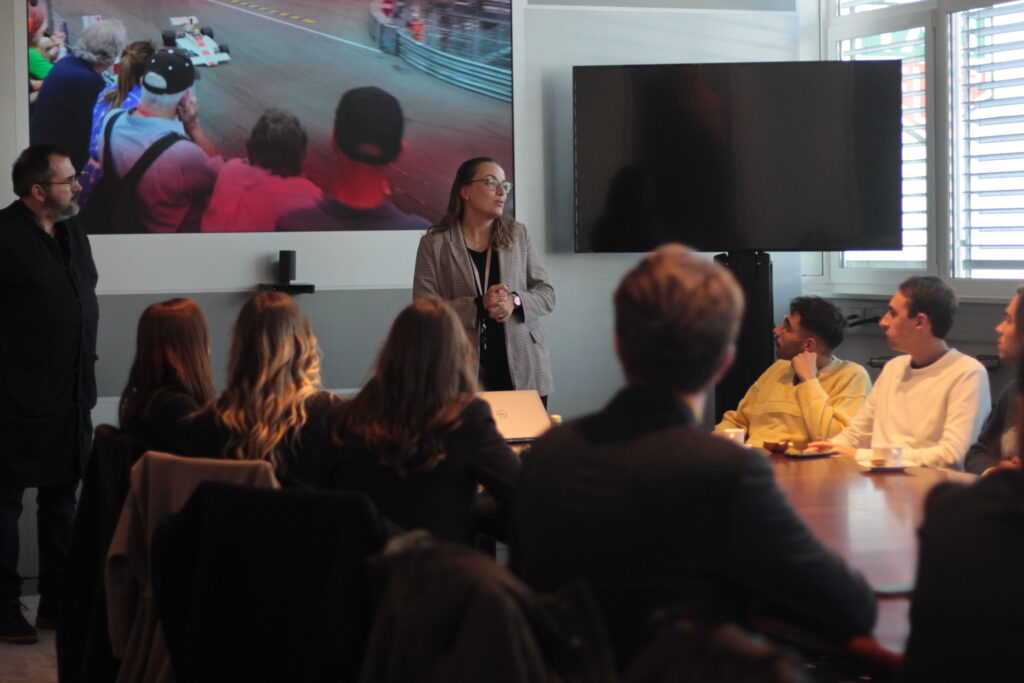
ICN Business School: ATMx, the Evolution of Our ATM Pedagogy
At ICN Business School, ATMx is far more than the name of a pedagogy: it’s how we prepare our students for jobs that, in many cases, don’t exist yet. Across our three campuses — Nancy, Paris, Berlin — we build our programmes around a simple conviction: learning to think matters more than learning to replicate.
What is ATMx at ICN Business School?
ATMx is the evolution of our historic pedagogical signature, ATM — Art, Technology & Management. The founding principle hasn’t changed: bringing together disciplines that are usually kept apart, to solve complex problems.
The “x” marks the expansion of that logic beyond the three founding disciplines. With ATMx, we encourage students to draw on every field of expertise relevant to a given situation: psychology to understand behaviour, data to inform a decision, the humanities to make sense of context. The goal isn’t to know everything — it’s to learn to step outside a single point of view and connect the dots.
A pedagogy built with professionals, not just teachers
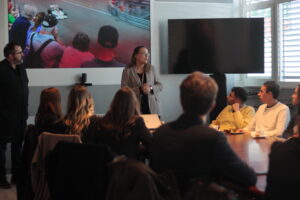
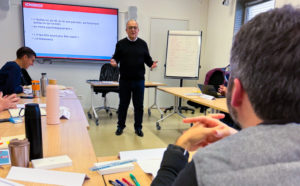
In practice, ATMx shapes the way we design our courses. Some modules aren’t only taught by our professors — they’re co-built with professionals whose expertise can’t be found in any textbook.
A few examples:
- La Negotiation under crisis conditions, taught alongside a former negotiator from RAID, France’s elite police tactical unit.
- La Creativity and idea-building, explored with a novelist.
- La Decision-making under pressure, shared by the head of a hospital emergency department.
These aren’t one-off guest speakers dropping in for an hour — they help build the course itself, alongside our faculty. This blend of academic theory and real-world expertise is what sets our pedagogy apart.
ATMx: one pedagogy, across every one of our programmes
ATMx isn’t reserved for a single, newly launched course — it’s the pedagogical thread running through all our programmes, from our bachelor’s degrees to our Programme Grande École, including our MSc programmes.
- Bachelor in Management (Licence-equivalent degree) — 3 years, in Nancy or Paris.
- International BBA — 4 years, in Paris or Berlin.
- BScAB — Bachelor of Science and Art in Business — 3 years, in Paris or Berlin, a genuinely new format in the French business school landscape.
- Master in Management (Master-level degree) — 3 years after a preparatory class, or 2 years via direct-entry admission, in Nancy, Paris or Berlin.
- MSc programmes (Master-level degree) — 2 years, in Nancy, Paris or Berlin depending on the specialisation.
Why choose a business school with several European campuses?
We’re built around three campuses — Nancy, Paris and Berlin — and an international student community. Wherever they study, this footprint lets every student grow in a multicultural environment and build the ability to work across different professional contexts — a skill increasingly valued by recruiters.
Frequently asked questions about ATMx and our programmes
What is ATMx at ICN Business School?
Hide answer
Show answer
ATMx is our signature pedagogy. It builds on our historic ATM approach (Art, Technology & Management) by extending that same cross-disciplinary logic to every field of knowledge useful for understanding a complex situation.
What's the difference between ATM and ATMx?
Hide answer
Show answer
ATM was the historic foundation of our pedagogy, built around three disciplines: art, technology and management. ATMx takes that further: it extends the same cross-disciplinary logic to any field of expertise relevant to a given situation — psychology, data, the humanities, among others — beyond those three founding disciplines.
What does an ATMx course actually look like?
Hide answer
Show answer
An ATMx course isn’t always taught by a single professor. Some modules are co-built with a professional whose expertise complements that of the faculty member: a negotiation course co-taught with a former RAID negotiator, or a decision-making course led alongside the head of a hospital emergency department, for example. The goal is to confront theory with real, lived experience, rather than stick to a traditional lecture format.
Does every course at ICN Business School follow the ATMx pedagogy?
Hide answer
Show answer
ATMx is the pedagogical thread running through all our programmes, but it doesn’t take the same shape everywhere. Some modules are directly co-built with professionals; others draw on projects or simulations that bring several disciplines together. It’s a cross-cutting logic, not a single format applied identically to every course.
Who teaches within the ATMx pedagogy?
Hide answer
Show answer
Our ATMx courses are co-built by our faculty and high-level professionals — a negotiator, a novelist, a hospital department head, among others — who take part directly in designing the modules, beyond one-off guest appearances.
Which programmes follow the ATMx pedagogy?
Hide answer
Show answer
ATMx applies across our entire offering: our three bachelor’s programmes (Bachelor in Management, International BBA, BScAB), our Programme Grande École and our MSc programmes. It isn’t a pedagogy reserved for one recently launched programme — it’s the common thread running through everything we teach.
Which bachelor's programmes does ICN Business School offer?
Hide answer
Show answer
We offer three bachelor’s programmes: the Bachelor in Management (Licence-equivalent, 3 years, Nancy or Paris), the International BBA (4 years, Paris or Berlin), and the BScAB — Bachelor of Science and Art in Business (3 years, Paris or Berlin).
What sets the BScAB apart from our other bachelor's programmes?
Hide answer
Show answer
The BScAB stands out for having no imposed specialisation and for offering a wider range of field experiences — designed for students looking for a path different from the classic business school bachelor’s format.
Which campuses is ICN Business School based on?
Hide answer
Show answer
We’re based across three campuses: Nancy, Paris and Berlin.
Which specialisations does the ICN Programme Grande École offer?
Hide answer
Show answer
In the second year, ICN Business School’s Programme Grande École offers specialisations in finance (Corporate Finance in English, Finance d’entreprise in French, and Audit and Compliance on the Nancy campus), marketing (Marketing and Product Innovation, Marketing Strategy and Consulting), international development (International Business Development), and human resources (HR Management and Social Innovation) — along with a few specialisations unique to the Nancy campus, such as management control or supply chain and procurement management. As this list changes every year, the up-to-date catalogue is available on the dedicated Master in Management page.
Which MSc programmes does ICN Business School offer?
Hide answer
Show answer
ICN Business School offers around fifteen MSc programmes across its three campuses, mainly in finance (Corporate Finance, M&A & PE, Asset Management & Hedge Funds, Market Risk Management, FinTech), marketing and business (Brand & Marketing Management, Luxury & Design Management, Customer Relationship & Sales Performance), and data and supply chain (Data, AI & Business Innovation, Smart & Sustainable Supply Chain). As the catalogue changes every year, the up-to-date list is available on the dedicated MSc page
What are the admission and format options for the Master in Management and MSc programmes?
Hide answer
Show answer
What are the admission and format options for the Master in Management and MSc programmes? ICN Business School’s Master in Management and MSc programmes are available in French and/or English, full-time and/or via apprenticeship (work-study), depending on the specialisation. Most start in September, but several MSc programmes also offer a February or May intake — a useful option for a mid-year career change, or for international applicants whose academic calendar doesn’t follow the French one.

International Webinar : Is a Master's in Europe Right for You?
Discover the event