Digital Detox: Utopia or Mental Health Lever?
Is a digital detox the answer to hyperconnectivity? Discover insights and advice from Dr Jean-François Stich, Professor of HR at ICN Business School, to protect your mental health.

The Collateral Damage of Hyperconnectivity
Barely back from holiday, we are already eager to disconnect. Emails arrive continuously and pile up, smartphones vibrate, and social networks bombard us endlessly. On average, 70% of emails are checked in less than 6 seconds, and it takes us up to 15 minutes to regain our pre-interruption productivity.
These permanent interruptions feed hyperconnectivity and cause work to spill over beyond the office and working hours. Hyperconnectivity therefore leads to losses in productivity and concentration, work overload, and work-life balance conflicts. It is therefore entirely legitimate to seek to disconnect, to recharge our batteries and reconnect with what matters most.
A digital detox to disconnect?
Faced with hyperconnectivity, a digital detox makes it possible to reduce the use of digital tools or applications over a chosen period to rebalance our relationship with technology. Its modalities are very diverse: it can last from a few days to a month, focus on several tools or specific functionalities, and take place on a daily basis or in dedicated locations, sometimes even on the other side of the world.
Whatever its modalities, a digital detox invites us to unplug. It therefore resonates with the right to disconnect, introduced in France in particular. It is important to bear in mind that this approach is voluntary. The right to disconnect is not a duty to disconnect. It is not about collectively unplugging employees, on pain of generating other problems of frustration or overload.
How to launch a digital detox?
On an individual scale, it is possible, for example, to reduce the frequency of checking emails to once an hour or four times a day. To trigger a collective dynamic, it is preferable to refrain from soliciting colleagues outside working hours: it is better to leave messages in drafts and send them later. An email sent over the weekend will be received and often read at the same time.
Since everyone thus bears a share of responsibility, companies could rather take advantage of collective initiatives, such as support groups, training sessions, charters, and awareness campaigns. Experimenting with a day without email can help make people realise that this tool is not as indispensable as it seems.
To find out more
To continue exploring these topics, here are some works by Dr. Jean-François STICH :
- Flow, le guide pour équilibrer vos pratiques numériques au travail : https://imslux.lu/assets/publication/200/FLOW_LEGUIDE_FR.pdf
- Sept bonnes raisons de ne pas répondre (tout de suite) aux e‑mails : https://theconversation.com/sept-bonnes-raisons-de-ne-pas-repondre-tout-de-suite-aux-e-mails-110322
- 40 jours de télétravail coupé du monde : conversation avec le « Web Robinson » Gauthier Toulemonde : https://theconversation.com/40-jours-de-teletravail-coupe-du-monde-conversation-avec-le-web-robinson-gauthier-toulemonde-134164
- Stress de l’e-mail : vers une nouvelle compréhension de ses causes et impacts : https://jfstich.com/publication-stress-email
- Holiworking: Perspectives on New Ways of Integrating Holiday and Work: https://jfstich.com/publication-holiworking
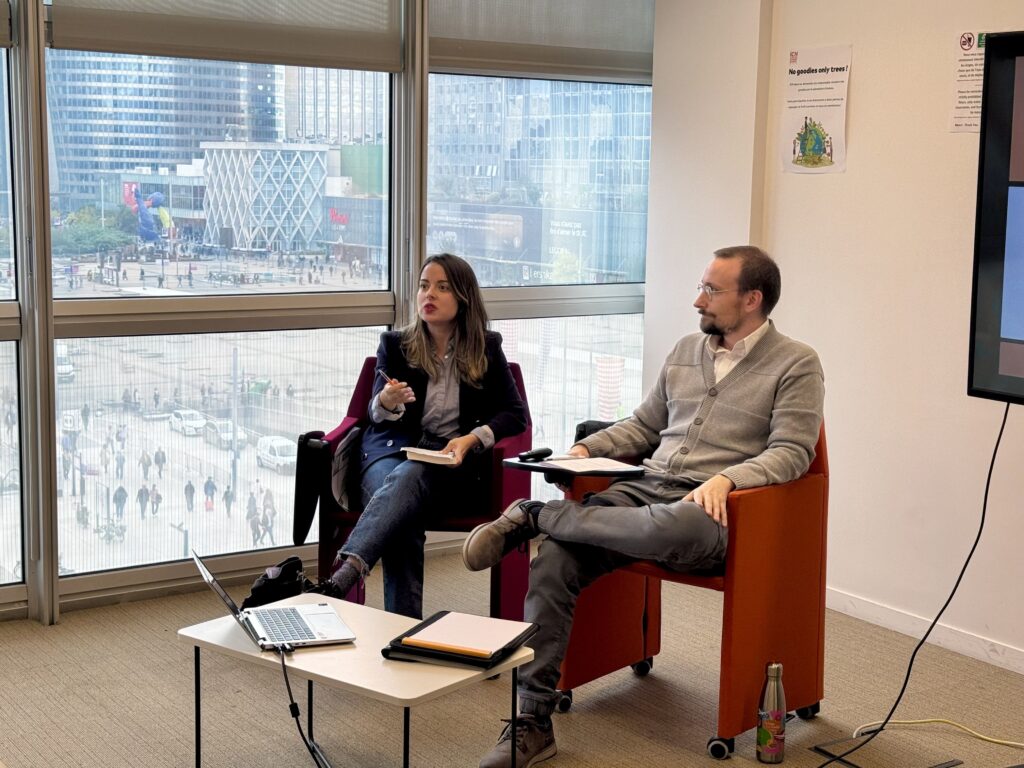
This article brings you key insights from the very first ICN Research Takeaway session.
Hosted at our ICN Paris La Défense campus, Research Takeaway brings academic research to life: 45 concise, interactive minutes with our professor-researchers to tackle today’s key workplace challenges.
Enjoyed this article? Don’t miss our upcoming sessions! Follow the Research Takeaway series to sharpen your management practices and join our next live events.