Finance is changing fast, reshaped by artificial intelligence, FinTech, data analytics and digital assets. Finance departments now need managers who can value a company and allocate capital, but also read a dashboard, assess a blockchain project or manage cyber risk.
The MSc Corporate Finance & Tech at ICN Business School trains the finance leaders who will manage this change. It combines advanced corporate finance, from consolidation and valuation to capital allocation and mergers and acquisitions, with emerging topics such as the FinTech ecosystem, blockchain and digital assets, responsible AI, cybersecurity and ESG finance. Data-driven finance runs through the whole programme, with Business Intelligence, Power BI, Python and financial modelling. The programme is taught in English in Paris and Berlin.
The MSc lasts two years, or one year with direct entry into Year 2. It is built on ATMx, ICN’s philosophy: solid foundations in management, then crossing them with other disciplines (art, technology, the sciences) and other professions.
Accreditation and recognition (Bac+5 visé, Master’s Degree grade, RNCP)
The MSc leads to the DESSMI, a diplôme visé Bac+5 that confers the Master’s Degree grade and is registered with the RNCP at level 7 (no. 42682). As an English-taught programme, it also holds the label of the Conférence des Grandes Écoles (CGE), a mark of quality valued by employers. ICN Business School is one of the few schools holding the triple accreditation AACSB, EQUIS and AMBA. The MSc is open after a Bachelor’s degree (180 ECTS) for Year 1, or after four years of higher education (240 ECTS) for direct entry into Year 2.
What makes this MSc stand out
Finance and technology together. Corporate finance is taught alongside FinTech, blockchain and digital assets, AI ethics and cybersecurity, so that you understand both the numbers and the technologies that change them.
Data-driven finance. Business Intelligence, Power BI, Python and financial modelling are at the core of the programme, with three TOSA certifications (Advanced Excel, Power BI, Python) to prove your command of the tools.
From the group accounts to the deal. Consolidation and group reporting, corporate valuation, capital allocation, M&A and restructuring, global tax strategy: you cover the full scope of a modern finance department.
Finance for tomorrow’s companies. Venture capital and growth equity, ESG and impact investing, AI governance: you learn to finance innovation and to integrate sustainability and ethics into financial decisions.
Start in February or May. Two intakes in Paris and one in Berlin let you begin without waiting for September.
Learning by doing
The Capstone project. In Year 2, you work in a team on a real finance and technology challenge set by a partner company, in two stages. Supervised by academics and professionals, you analyse a complex problem, propose solutions and defend them. A concrete deliverable to showcase on your CV and in interviews.
Micro-certificates. These short modules give you command of tools recognised by employers, with an official TOSA certification: Advanced Excel in Year 1, Power BI and Python in Year 2.
The CréaCthon (#ATM). A collective innovation workshop where you work with profiles different from your own, in the Art, Technology, Management spirit that makes ICN unique.
The CreaCtive Learning Expedition. In Year 2, an immersion in an innovative ecosystem to see first-hand how companies transform.
Skills that make the difference. Speaking to convince (Talk & Impact), strategic use of generative AI (Prompt Engineering), and support in building your career plan (Unlock Your Career Potential).
Professionalisation
You complete at least 2 months of professional experience in Year 1 and 4 to 6 months at the end of your studies, in finance, technology or related fields. Internships, entrepreneurial projects and fixed-term or permanent contracts all count, as long as they relate to the specialisation.
ICN’s Careers and Internships Service supports you in finding internships and your first job. Company presentations and meetings with finance departments, banks and FinTech companies complete this experience. ICN works with more than 130 partner companies.
An international outlook
In semester 2, you can study at one of ICN’s partner universities, for example Aarhus University (Denmark), University College Dublin (Ireland), LUISS (Rome), Kozminski University (Warsaw), Université Laval (Quebec), Tecnológico de Monterrey (Mexico) or Hong Kong Baptist University. Internationally focused activities also lead to the Global Competency Certificate, which recognises your intercultural skills.
Programme organisation
Duration: 2 years (120 ECTS), or 1 year with direct entry into Year 2
Full time, in Paris or Berlin (3 days of classes per week in Berlin)
Each year combines a core curriculum in Management by Innovation and specialisation courses
In semester 2, an academic stay abroad (30 ECTS) can replace classes on campus
Corporate finance and financial strategy
You develop advanced expertise in corporate finance and in the strategic management of financial performance. You learn to consolidate group accounts and report at group level, to value companies and build financial models, and to analyse investment decisions and capital allocation. In Year 2, you study mergers and acquisitions and corporate restructuring, and global tax strategy, digital trade and customs.
Data analytics and financial management tools
You are trained in Business Intelligence and strategic decision-making, and in financial modelling with Power BI and Python. You learn to collect, structure and interpret complex datasets, build financial scenarios and turn them into recommendations for decision-makers.
FinTech, digital assets and emerging risks
The programme explores the technologies reshaping the finance function: the FinTech ecosystem, blockchain, cryptocurrencies and digital assets in corporate finance. You also learn to manage the risks these technologies create, through courses on cybersecurity, data privacy and digital risk management, and on AI ethics, policy and responsible governance.
Entrepreneurial and sustainable finance
You study venture capital, growth equity and the financing of innovative companies, and learn to spot value-creation opportunities in fast-moving technology environments. A course on ESG, sustainable finance and impact investing prepares you to integrate environmental and social criteria into financial decisions.
Business Intelligence & Strategic Decision-Making (specialisation)
30h
4
Professional experience
(at least 2 months)
15
Advanced Excel micro-certificate (TOSA)
20h
Validated
Year 2 – Semester 3 (240 hours, 30 ECTS)
COURSE
HOURS
ECTS
Business Models & Entrepreneurship
20h
3
Financing Innovative Projects
15h
2
Research Methods & Data Analysis
30h
4
English for Specific Purposes
20h
3
Capstone project – part 1
15h
2
Strategic Financial Management & Capital Allocation
30h
4
The FinTech Ecosystem, Blockchain, Cryptocurrencies & Digital Assets in Corporate Finance
30h
4
Mergers & Acquisitions and Corporate Restructuring
30h
4
Global Tax Strategy, Digital Trade & Customs
30h
4
Power BI micro-certificate (TOSA)
20h
Validated
Year 2 – Semester 4 (190 hours, 30 ECTS)
COURSE
HOURS
ECTS
Change Management & CreaCtive Leadership
15h
2
CreaCtive Learning Expedition (ATMx)
20h
Validated
Capstone project – part 2
15h
2
AI Ethics, Policy & Responsible Governance
30h
4
Entrepreneurial Finance, Venture Capital & Growth Equity
30h
4
Cybersecurity, Data Privacy & Digital Risk Management
30h
4
ESG, Sustainable Finance & Impact Investing
30h
4
Python micro-certificate (TOSA)
20h
Validated
Master’s thesis
10
End-of-studies professional experience
(4 to 6 months)
Validated
Source: 2027 course overview. With direct entry into Year 2, some core courses move between semesters 3 and 4. Content subject to change.
Intakes
February 2027, in Paris: Year 1 or direct entry into Year 2.
May 2027, in Paris or Berlin: Year 1 or direct entry into Year 2.
Entry requirements
Year 1: a Bachelor’s degree or equivalent (180 ECTS credits)
Direct entry into Year 2: four years of higher education (240 ECTS credits)
Returning to studies? Direct entry into Year 2 is also possible with a three-year degree and at least 3 years of professional experience in a related field
No professional experience is required for other applicants
English level: TOEFL 75, IELTS 6, TOEIC 750, Duolingo 105, Cambridge FCE or PTE Academic 51–58
How to apply
Applications go through the MSc (DESSMI) admissions process. Selection is based on your application file and an interview, which look at your academic background and your motivation for careers in finance and technology. The admission calendar follows the sessions set by ICN Business School.
Do you have a disability? ICN’s disability advisor, Madeleine Ostrowski (madeleine.ostrowski@icn-artem.com), supports you from your application to the end of your studies.
Applying from outside France? See the international page of this MSc.
Careers after the MSc
93% of our employed MSc graduates found their job within 6 months, nearly half of them before graduating. Average salary: €41,700 gross per year, including bonuses (2026 DESSMI employment survey, class of 2024-25).
Examples of careers
Investment banking and corporate finance: M&A Analyst, Corporate Finance Adviser, Valuation Analyst, Corporate Development Manager
Asset management and investment: Investment Analyst, Portfolio Manager (technology focus), Venture Capital Analyst, Private Equity Analyst
FinTech and technology companies: FinTech Product Manager, Blockchain Strategist, Financial Data Scientist, AI Specialist in Finance, FinTech Consultant
Financial institutions: Digital Transformation Lead, Financial Innovation Specialist, Technology Risk Analyst, Compliance Officer with FinTech expertise, Treasury Analyst
Consulting: Strategy Consultant in Financial Services, FinTech and Digital Transformation Consultant
Graduates join a network of more than 24,000 ICN alumni, many of whom work in finance and technology in France and abroad.
Tuition fees (February and May 2027 intakes)
Year 1: €13,000
Year 2: €13,000
Direct entry into Year 2: €15,000
Scholarships and funding
Your financial circumstances should not stop you from joining the school of your choice. ICN offers several options: scholarships, partial fee waivers, payment in instalments and bank loans.
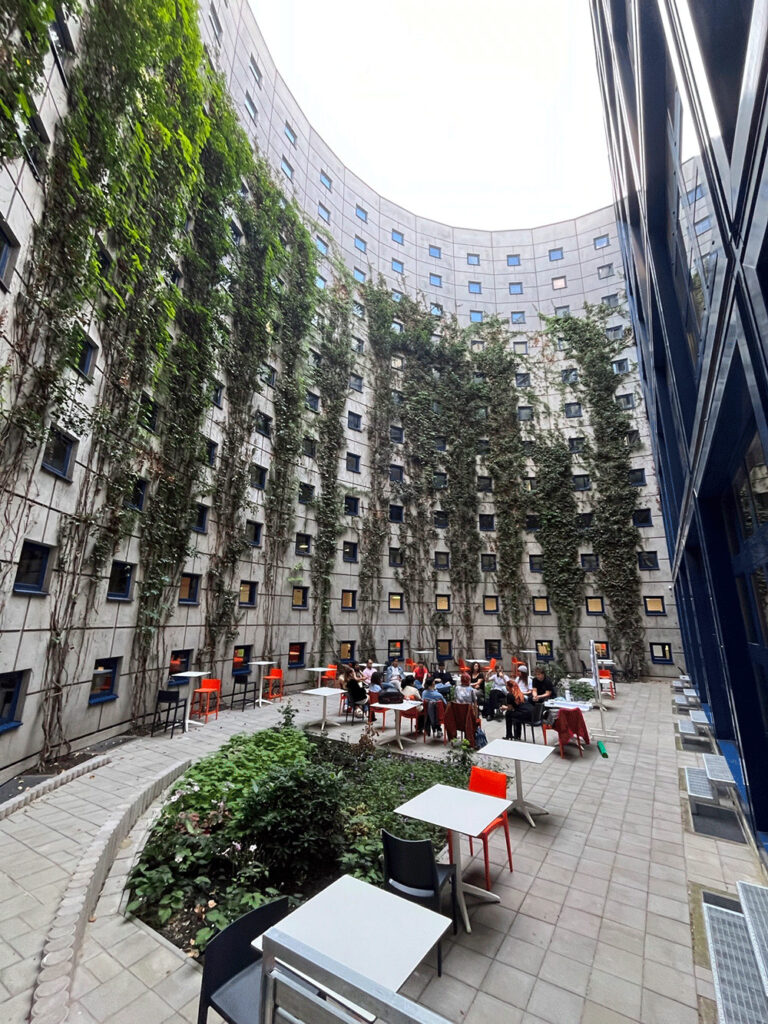
The Berlin campus is set in a natural environment at the heart of one of Europe’s largest capitals. Located along the River Spree and surrounded by numerous parks, this recently opened campus (inaugurated in 2025) offers a peaceful setting.
Situated in the Moabit district, our Berlin campus allows students to be close to some of the world’s leading start-ups and to enjoy an exceptional cultural life in the German capital.
If you would like to learn more about the city and the campus, please visit our dedicated Berlin campus page.
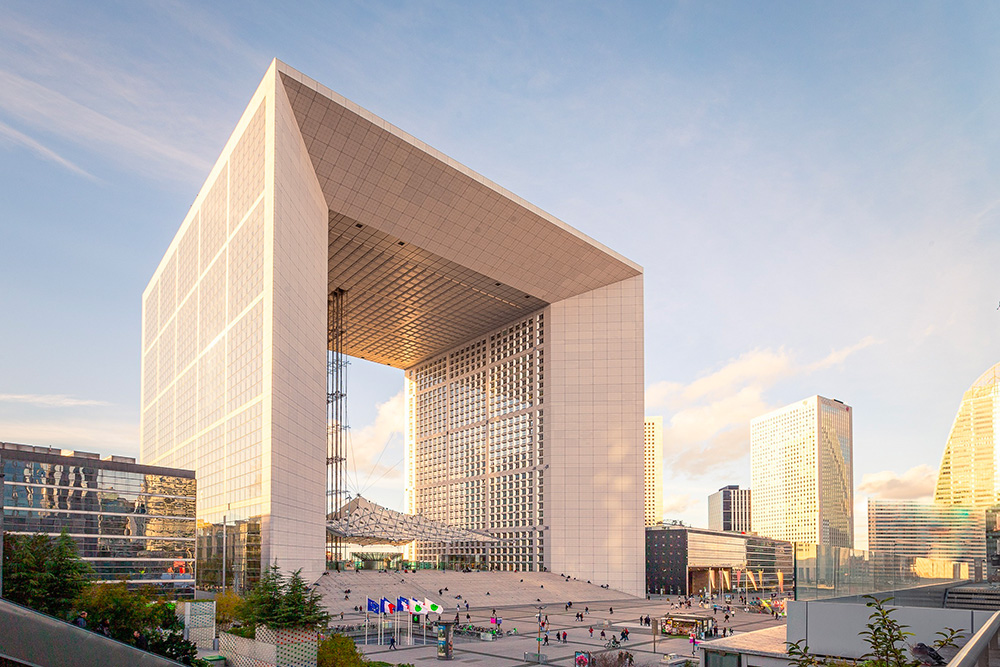
The Paris La Défense campus is located in the heart of Europe’s largest business district, ranked fourth worldwide. Offering direct access to 2,800 major French (CAC 40) and international companies and economic organisations based in La Défense, our campus provides students with an unrivalled location for internships and job searches.
If you would like to learn more about Paris, please visit our dedicated Paris campus page.
the CGE-accredited MSc and the DESSMI, Master's Degree grade
770
hours
of classes over two years, including 360 hours of finance and technology specialisation
6
At least 6 months
of professional experience built into the programme
3
TOSA certifications
Advanced Excel, Power BI, Python
2
campuses
Paris La Défense and Berlin
93%
of employed MSc graduates
found their job within 6 months
FAQ: Everything you need to know about the MSc Corporate Finance & Tech
Can I start the MSc in February?
CollapseExpand
Yes, in Paris. The programme also starts in May, in Paris and Berlin.
What is the difference with the MSc Finance?
CollapseExpand
The MSc Corporate Finance & Tech welcomes students in February and May 2027. From September 2027, it continues as the Financial Technology track of the MSc Finance, one programme with five tracks taught in Paris and Berlin. If you want to start in September, apply to the MSc Finance.
Can I join the MSc directly in the second year?
CollapseExpand
Yes, with four years of higher education (240 ECTS credits). You then complete the MSc in one year.
Which tools will I learn?
CollapseExpand
Advanced Excel, Power BI and Python, each with a TOSA certification, as well as financial modelling and Business Intelligence tools.
How many hours of classes?
CollapseExpand
About 770 hours over two years, including 360 hours of specialisation courses, plus at least 6 months of professional experience.
Can I study abroad?
CollapseExpand
Yes. In semester 2, you can replace classes on campus with a semester at one of ICN’s partner universities.
I already work: can I join the MSc?
CollapseExpand
Yes. With a three-year degree and at least 3 years of professional experience in a related field, you can join directly in Year 2.