



Social and Environmental Responsibility

At ICN Business School, social responsibility lies at the heart of our commitment. We act on a daily basis to educate responsible managers by integrating social, environmental, and ethical issues into both our teaching and our initiatives.

Our CSR Policy in Action

As part of our new 2022–2026 strategy, ICN is developing ICN Impact, an ambitious action plan designed to fully embed social and environmental responsibility issues across all its internal and external activities. The objective is to align with the Government’s 2030 Agenda and the 17 Sustainable Development Goals (SDGs).

ICN thus positions itself as a committed stakeholder in social and environmental responsibility. Thanks to the strength of our entire community, we are working towards an ambitious social and environmental transition. By educating the responsible managers of tomorrow, ICN is committed to transforming society for a more sustainable and inclusive world.

Furthermore, ICN Business School is also committed at the international level as a member of the United NationsGlobal Compact and PRME (Principles for Responsible Management Education). In 2024, ICN was awarded the DD&RS label by CIRSES for higher education institutions. This distinction places us among the very select group of the top 10% of French schools to hold this certification.

As part of the DD&RS label, ICN pays particular attention to issues related to its CSR policy:

  • We focus on education in sustainability challenges and support our students’ impact-driven entrepreneurship.
  • Our faculty ensure that responsible innovation is integrated into their research.
  • We monitor the social and environmental initiatives of our partners.
  • Our staff are made aware of our climate strategy aimed at reducing emissions and benefit from an inclusive and equitable social policy.

ICN Business School, a mission-driven company

ICN Business School is strengthening its commitment to the public interest by becoming a mission-driven company (société à mission). This step formally places its purpose and its social and environmental commitments at the heart of its governance.

The school’s mission rests on three complementary commitments:

  • Developing multidisciplinary research that serves responsible innovation and sustainable practices.
  • Offering innovative, transdisciplinary programmes that integrate social, environmental and intercultural issues.
  • Running the school as an exemplary model of social and environmental responsibility, in particular by promoting diversity, inclusion and impact partnerships.

In line with the ATMx philosophy (Art, Technology, Management and the connections between disciplines), this mission reflects ICN’s determination to contribute concretely to economic, social and environmental transitions.

Its implementation is monitored by a Mission Committee, which reports every year on the actions taken and the results achieved. Progress towards the social and environmental objectives is also periodically verified by an independent third-party body.

Our contribution to the Sustainable Development Goals

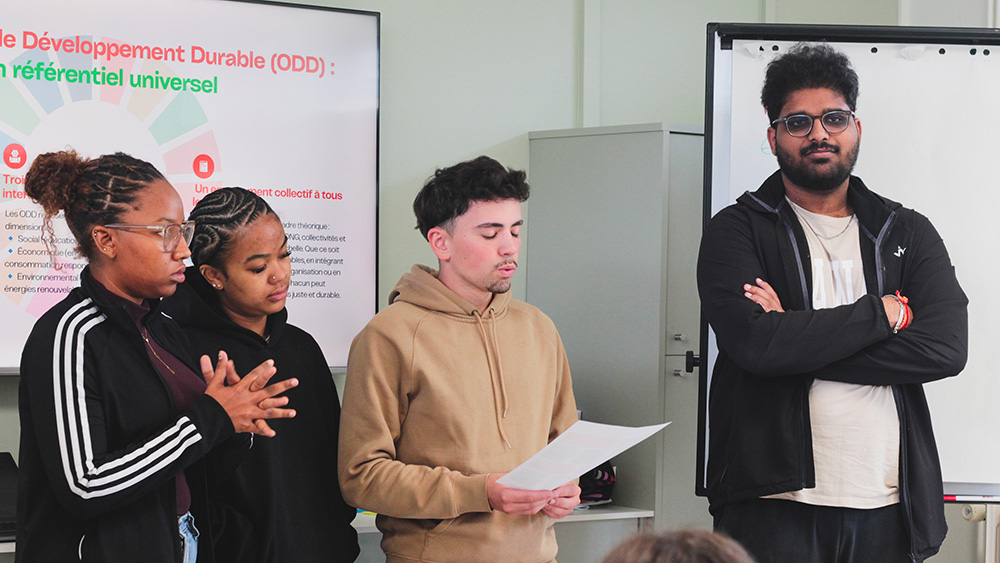
The United Nations’ 17 Sustainable Development Goals (SDGs) provide an international framework for action towards a more sustainable and inclusive future. ICN contributes to this ambition through its teaching, its research, its operations and its partnerships.
Our strategy and its governance

ICN’s CSR approach is built on the ICN Impact action plan, its international commitments and the principles of responsibility and sustainable development shared by its whole community. It lies at the heart of the school’s strategy and aims to create a positive and lasting impact for its stakeholders.

The approach is steered by the Quality and Accreditations Department, which holds responsibility for CSR within the school. A CSR Manager coordinates the roll-out of actions, working closely with all the school’s departments to ensure a cross-cutting and consistent approach.

The ICN Impact Committee, made up of 20 staff members representing all the school’s departments, contributes to implementing and monitoring the ICN Impact action plan. It encourages collective engagement and ensures that responsibility and sustainable development issues are integrated into the school’s activities.

The Mission Committee, made up of 9 members, oversees the actions that contribute to ICN’s statutory objectives and purpose. It assesses the resources committed, monitors the related performance indicators and publishes an annual report on progress and results.

This governance ensures regular monitoring of the commitments made, measures the progress achieved and guarantees the transparency of the approach for all stakeholders.

Our actions and results

Social responsibility takes shape through educational initiatives, research, inclusion actions and collaborations with our partners.

2024-2025 report on actions

Societal impact of research. ICN stepped up its efforts to better showcase and measure the societal impact of its research:

  • two training sessions for faculty on measuring and showcasing research impact;
  • an assessment grid to integrate impact criteria into research activities;
  • a dedicated committee to assess and monitor research impact.

Responsible digital practices and decarbonisation. ICN continued its actions for the ecological and digital transition:

  • a responsible digital week: Digital Cleanup Day, talks on responsible artificial intelligence, workshops, awareness quizzes and an e-waste collection;
  • signature of the Responsible Digital Charter of the Institut du Numérique Responsable (INR);
  • launch of the Act’Sup programme to structure the school’s decarbonisation strategy (October 2024);
  • participation in the “Responsible Digital” cohort run by the association Latitudes;
  • biodiversity actions: a permaculture vegetable garden, a biodiversity inventory during the first-year Bachelor seminar, and biodiversity workshops in the Bachelor and PGE graduation seminars.

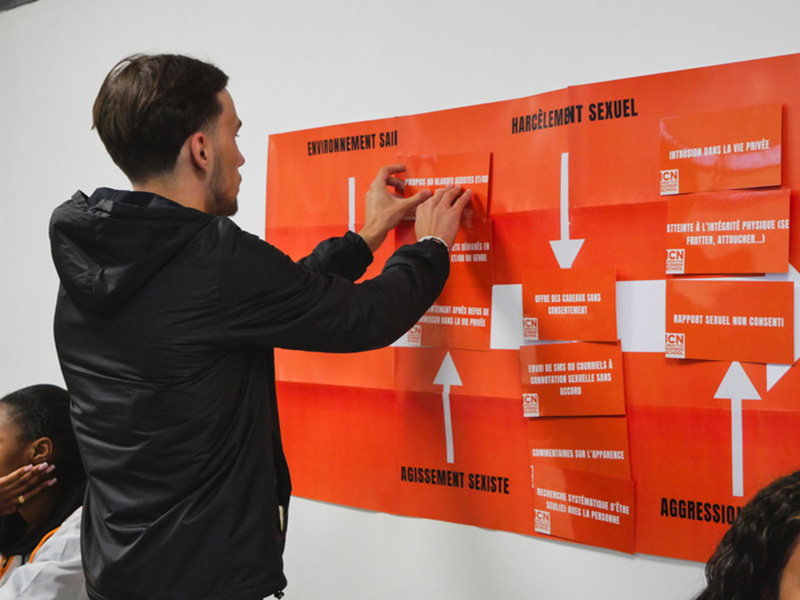
Equality, diversity and inclusion. The year saw several advances in inclusion and equal opportunities:

  • creation of a Gender Equality unit;
  • Diversity Month, with awareness actions for the whole community (March 2025);
  • signature of L’Autre Cercle’s LGBT+ Commitment Charter (13 March 2025);
  • a partnership with the association PAWALP (January 2025);
  • eight awareness workshops, attended by nearly 140 staff members.

Integrating sustainability and CSR into programmes. The integration of sustainable development and social responsibility into programmes continued to grow:

  • creation of a dedicated CSR pathway;
  • integration of Climate School content into several programmes, and launch of the optional “ICN Climate School” e-learning module;
  • the Climate Fresk for 100% of first-year Bachelor and EMBA students, and its roll-out to international students;
  • the 2tonnes workshop for 100% of first-year Bachelor and PGE 1 students;
  • training for teachers on integrating the SDGs into their courses (May 2025);
  • “AI Battle” and “Tech Battle” workshops for some PGE 2 students;
  • the Sulitest Awareness test for all first-year Bachelor, PGE and DESSMI students, and some final-year students;
  • two events dedicated to impact careers, in partnership with the association Séisme (November 2024 and April 2025);
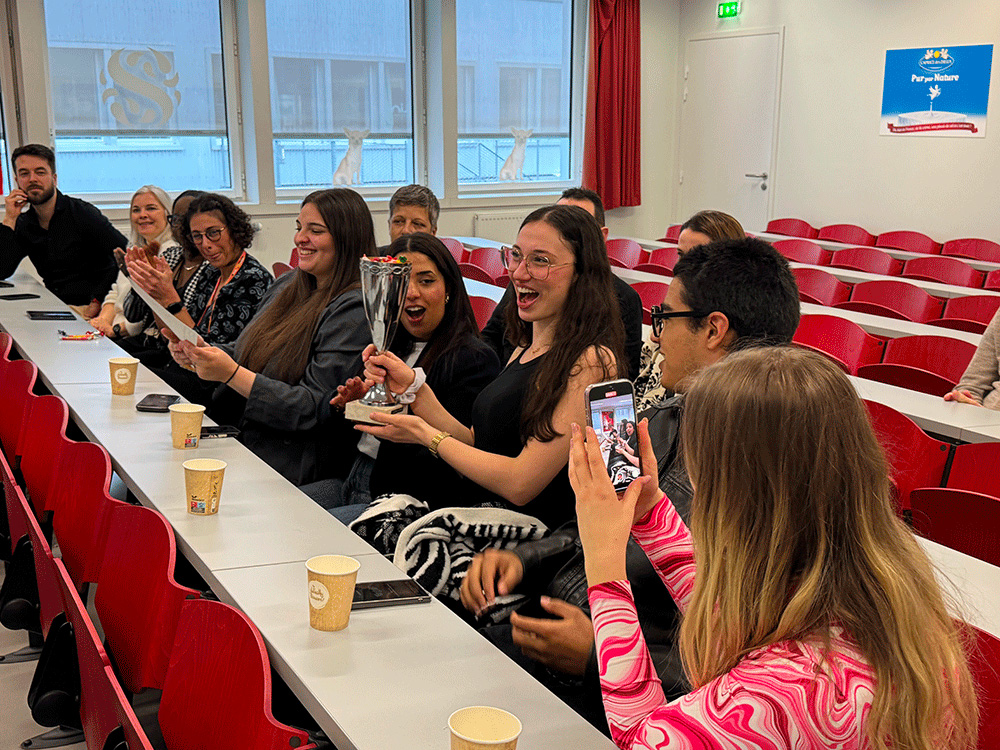
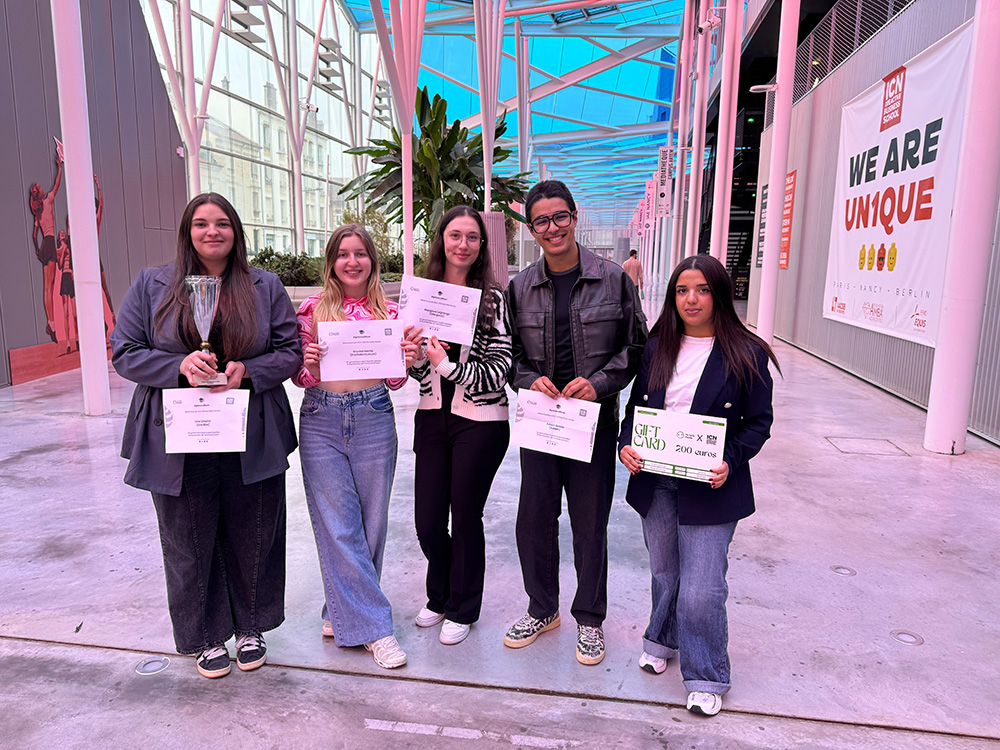
  • the “Ma Petite Planète” challenge: 63 participants in 7 teams, ranking 4th out of 48 institutions;
  • the Diversity Fresk for PGE 2 and EMBA students.

Student engagement. Student associations took action on inclusion, with awareness and anti-discrimination events on 13 March in Nancy and 28 April in Paris.

Our publications and reference documents

Find the documents that present ICN Business School’s commitments and achievements: the ICN Impact strategic plan, carbon footprint report, DD&RS label, charters and institutional policies, and reports and publications on sustainable development.

Strategy and reports

Charters and commitments

Our actions in pictures

Scroll through

School life

Article
︱23.11.26

AI, Advertising and Trust: Research Challenges Common Assumptions

Read more
Article
︱27.10.26

The Executive MBA is transforming to train for complexity!

Read more
Article
︱14.10.26

Digital Detox: Utopia or Mental Health Lever?

Read more