Why choose the MSc Finance – Financial Technology?
Financial technology sits at the intersection of finance, mathematics, programming and new digital business models. Algorithmic trading, digital assets, decentralised finance and machine learning are changing the infrastructure of capital markets and financial services, and employers look for profiles who understand both the finance and the code behind these innovations.
The Financial Technology track of ICN’s MSc Finance is designed for students who want to understand not only how financial innovations are used, but also the quantitative and computational methods behind them. It starts with derivatives, asset pricing, financial engineering and risk modelling, before moving on to algorithmic trading, financial data analytics and machine learning in finance. You explore how quantitative strategies are designed and tested, how models support financial decisions, and where their assumptions and limitations matter. The track also covers blockchain applications, digital assets, decentralised finance and the changing infrastructure of capital markets, with attention to the practical and regulatory questions they raise.
The MSc Finance is one programme with five specialised tracks, taught in English in Paris and Berlin. You start with a shared foundation in financial instruments, valuation and financial data analysis, then specialise. The common finance curriculum takes the CFA Program curriculum as an international reference point, while each track draws on frameworks relevant to its professional field. ICN’s Management by Innovation approach, built on ATMx, adds a wider perspective on technology, entrepreneurship, organisational change and responsible decision-making. The MSc lasts two years, or one year with direct entry into Year 2.
Accreditation and recognition
You graduate with two degrees: the Master of Science, accredited by the Conférence des Grandes Écoles (CGE), the association of France’s leading higher education institutions, and a degree conferring the Master’s Degree grade, approved by the French Ministry of Higher Education (diplôme visé) and registered with the RNCP at level 7 (no. 42682), the level of a Master’s degree in the European Qualifications Framework. ICN Business School holds the AACSB, EQUIS and AMBA accreditations: this “triple crown” is held by around 1% of business schools worldwide. ICN also holds the Bienvenue en France label, awarded by Campus France for the quality of its welcome for international students.
Why international students choose MSc Finance – Financial Technology
What makes this track stand out
Quantitative and hands-on. From financial engineering to algorithmic trading and machine learning, you learn the models behind financial innovation and how to test them. Professional references. The track draws on the Certificate in Quantitative Finance (CQF) framework, and the common finance foundation is designed with reference to the CFA Program curriculum. This does not imply the automatic award of an external certification. Tools recruiters expect. You earn TOSA certifications in Advanced Excel, Power BI and Python, and complete Bloomberg Market Concepts (BMC), the e-learning course on Bloomberg’s market tools, within the financial markets module.
MSc Finance at ICN Business School: 1 programme, 5 Tracks
You share a solid finance foundation with all MSc Finance students in Year 1 before specialising, so you graduate with both a broad view of finance and a specialist profile.
Paris or Berlin. Study at La Défense, Europe’s leading business district, or in Berlin, at the heart of Europe’s start-up and investment scene.
Learning by doing
The Capstone Project. In two parts, you tackle a real business question, support your analysis with evidence and present your recommendations. A concrete piece of work to present in interviews.
The Créacthon (ATMx). A collective innovation workshop where you work with profiles different from your own, in ICN’s Art, Technology, Management spirit.
The Creactive Learning Expedition. An immersion in an innovative ecosystem in Year 2.
Professionalisation
You complete at least 2 months of professional experience in Year 1 and at least 4 months in Year 2, for example in M&A advisory, transaction services, investment banking, private equity or corporate development. ICN’s Careers and Internships Service helps you find internships and your first job, in France, Germany or elsewhere.
ICN works with more than 130 partner companies.
Living and studying in Paris or Berlin
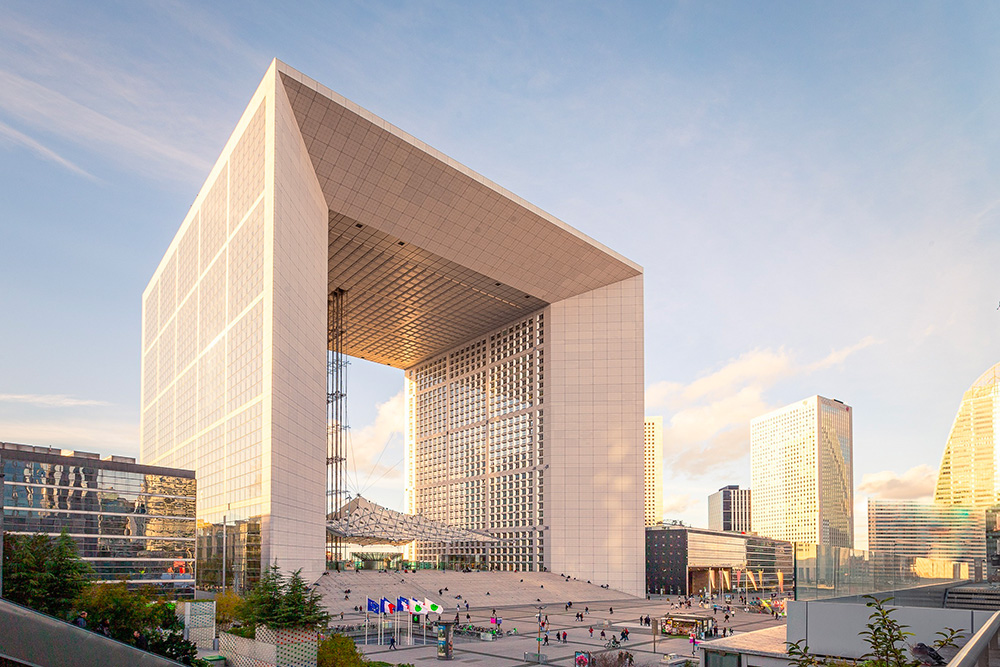
Paris is France’s largest job market and a city where cultural life never stops. The La Défense campus, 8,000 m² with collaborative spaces and a rooftop terrace, welcomes students from all over the world.
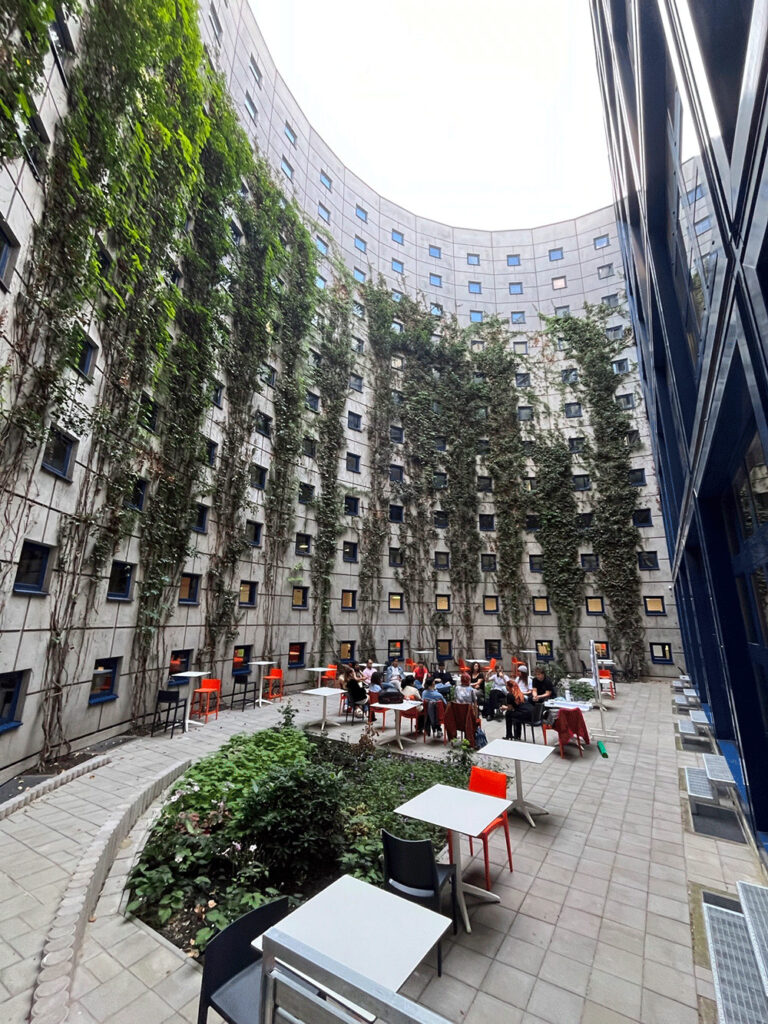
Berlin is the largest capital city in the European Union and the second most popular city among Erasmus students. It is highly multicultural and multilingual, with a strong start-up culture, and you do not need to speak German. The Moabit campus, surrounded by greenery along the River Spree, is a calm place to study.
On both campuses, ICN’s Student Success team supports you throughout your studies, on academic matters as well as practical life.
An international outlook
In semester 2 (Year 1) or semester 3 (Year 2), you can study at one of ICN’s partner universities, for example Aarhus University (Denmark), University College Dublin (Ireland), LUISS (Rome), Kozminski University (Warsaw), Université Laval (Quebec), Tecnológico de Monterrey (Mexico) or Hong Kong Baptist University. Internationally focused activities also lead to the Global Competency Certificate, which recognises your intercultural skills.
All MSc Finance students build a shared foundation in financial markets, instruments and digital assets, corporate valuation, governance and ethics, and financial data analytics. Bloomberg Market Concepts is part of the financial markets module. Alongside, the Management by Innovation core develops managerial, technological, interpersonal and research skills: strategy and innovation, project management, digital transformation and AI, data management, and responsible innovation.
Financial Markets, Instruments & Digital Assets (including Bloomberg Market Concepts)
Corporate Valuation, Governance & Ethics
Financial Data Analytics
Applied learning: Advanced Excel (TOSA), Capstone Project – Part 1
Management by Innovation, Year 1 – Discover & Innovate: Strategy and Innovation, Project Management, Organisational Dynamics at Work, Digital Transformation & Artificial Intelligence, Data Management, Responsible Innovation: Law, Ethics & Governance, CréaCthon (ATMx), Talk & Impact: Communicating to Persuade, The Art of Prompting, Unlock Your Professional Potential, English for Effective Teams, Global Competency Certificate.
Year 2, semester 3: markets and quantitative expertise
In semester 3, you study derivatives and financial engineering, asset pricing and quantitative valuation, computational finance and financial risk management: the tools you need to understand how assets behave and how portfolio risk is measured.
Derivatives & Financial Engineering
Asset Pricing & Quantitative Valuation
Computational Finance
Financial Risk Management
Applied learning: Power BI (TOSA)
Year 2, semester 4: the technologies reshaping finance
In semester 4, you work on algorithmic trading and financial analytics, Web3, DeFi and the future of capital markets, FinTech platforms and blockchain applications, and machine learning and AI for finance. By connecting modelling techniques with real financial use cases, you build a profile suited to analytically demanding roles in FinTech, quantitative finance and digital financial services.
Algorithmic Trading & Financial Analytics
Web3, DeFi & the Future of Capital Markets
FinTech Platforms & Blockchain Applications
Machine Learning & AI for Finance
Applied learning: Python (TOSA), Capstone Project – Part 2
The Management by Innovation core continues with business models and entrepreneurship, financing innovative projects, change management and creative leadership, and a research dissertation.
Management by Innovation, Year 2 – Specialise & Create Value: Business Models and Entrepreneurship, Financing Innovative Projects, Change Management and CreaCtive Leadership, CreaCtive Learning Expedition (ATMx), English for Specific Purposes, Global Competency Certificate, Research Methodology and Data Analysis, Research Dissertation.
MSc Finance – Financial Technology: Admissions and procedures
Available Intakes for MSc Finance – Financial Technology
September 2027, in Paris or Berlin: Year 1 or direct entry into Year 2
Year 1: a Bachelor’s degree or equivalent (180 ECTS credits)
Direct entry into Year 2: four years of higher education (240 ECTS credits), or three years of higher education and at least 3 years of professional experience in a related field
No professional experience is required for entry after four years of higher education
English: TOEFL 75, IELTS 6, TOEIC 750, Duolingo 105, Cambridge FCE or PTE Academic 51–58, unless English is your native language
No French or German is required
MSc Finance – Financial Technology: How to apply
1. Fill in the online application form, upload your documents and pay the €100 application fee (non-refundable). 2. Complete the one-way video interview within 5 days. The academic jury replies within 8 to 10 business days, outside holiday periods. 3. If you are admitted, pay the deposit to confirm your place. 4. You receive your official admission letter and can start your visa process.
Documents: CV in English, transcripts of the last 3 years, your most recent diploma or a certificate of enrolment, English test results, a copy of your passport or ID card, and any other relevant diplomas or certificates.
Paris: non-EU students apply for a long-stay student visa (VLS-TS). In countries covered by the Études en France procedure, the application goes through Campus France. In other countries, contact the French consular authorities in your country.
Berlin: non-EU students apply for a German study visa at the German embassy or consulate responsible for their place of residence, no later than 3 months before their arrival.
Do you have a disability? ICN’s disability advisor, Madeleine Ostrowski (madeleine.ostrowski@icn-artem.com), supports you from your application to the end of your studies.
Careers after the MSc Finance – Financial Technology
93% of our employed MSc graduates found their job within 6 months, nearly half of them before graduating. Average salary: €41,700 gross per year, including bonuses (2026 DESSMI employment survey, class of 2024-25).
Job opportunities after the MSc Finance – Financial Technology
FinTech Analyst
Quantitative Analyst
Financial Data Analyst
Algorithmic Trading Analyst
Digital Assets Analyst
Financial Technology Consultant
Students also benefit from the strength of ICN Business School’s global network of more than 25,000 alumni. A significant proportion of these graduates work in finance, technology, and start-up ecosystems across France and internationally, creating valuable opportunities for networking, professional integration, and career development.
The programme’s added value is further reinforced by the strategic locations of ICN’s campuses.
In Berlin, students study in the heart of one of Europe’s leading technology hubs, home to the offices and headquarters of major international companies such as Apple, Amazon, IBM, Google, and SAP. This vibrant ecosystem offers excellent opportunities for internships, networking, and early career development.
In Paris, students benefit from a unique learning environment in the heart of La Défense, the largest financial district in the European Union, providing direct exposure to major financial institutions, multinational corporations, and strategic business networks.
This unique combination of academic excellence, strategic geographical positioning, and the strength of the ICN network enables graduates to secure high-value roles and accelerate their careers within highly competitive and rapidly evolving industries.
Training costs and funding options
Year 1: €14,800
Year 2: €13,000
Direct entry into Year 2: €15,000
For international students, a deposit of €4,000 (€800 for EU students or students who do not need a visa), deductible from tuition fees, is required at the time of registration. The remaining fees can be paid in one or three instalments within 3 months of the start of the academic year.
Scholarships at ICN Business School
ICN Business School understands that the cost of education can be a barrier for many students. We have therefore introduced schemes such as scholarships to help you make your study plans a reality.
The Paris La Défense campus is located in the heart of Europe’s largest business district, ranked fourth worldwide. Offering direct access to 2,800 major French (CAC 40) and international companies and economic organisations based in La Défense, our campus provides students with an unrivalled location for internships and job searches.
If you would like to learn more about Paris, please visit our dedicated Paris campus page.
The Berlin campus is set in a natural environment at the heart of one of Europe’s largest capitals. Located along the River Spree and surrounded by numerous parks, this recently opened campus (inaugurated in 2025) offers a peaceful setting.
Situated in the Moabit district, our Berlin campus allows students to be close to some of the world’s leading start-ups and to enjoy an exceptional cultural life in the German capital.
If you would like to learn more about the city and the campus, please visit our dedicated Berlin campus page.
Is the Financial Technology track a separate degree?
CollapseExpand
No. It is one of the five tracks of the MSc Finance. You graduate with the MSc Finance and the Master’s Degree grade.
Do I need programming skills?
CollapseExpand
The track is particularly suited to students who enjoy working with data, code and financial models. Python is part of the programme, with a TOSA micro-certificate.
Can I join directly in Year 2?
CollapseExpand
Yes, with four years of higher education (240 ECTS). The MSc then lasts one year.
Should I choose Paris or Berlin?
CollapseExpand
The track is offered on both campuses, with the same programme. In Berlin, classes take place three days a week.
Which tools will I learn?
CollapseExpand
Advanced Excel, Power BI and Python, each with a TOSA certification, and Bloomberg Market Concepts within the financial markets module.
Can I study abroad?
CollapseExpand
Yes. In semester 2 (Year 1) or semester 3 (Year 2), you can replace classes on campus with a semester at one of ICN’s partner universities.
Do I need to speak French or German?
CollapseExpand
No. All classes are taught in English.
Can I apply with a degree from outside France?
CollapseExpand
Yes. You need a Bachelor’s degree or equivalent (180 ECTS) for Year 1, or four years of higher education (240 ECTS) for direct entry into Year 2.
Will my degree be recognised in my country?
CollapseExpand
The degree confers the Master’s Degree grade and is registered with the RNCP at level 7, the level of a Master’s degree in the European Qualifications Framework. ICN holds the AACSB, EQUIS and AMBA
I already work: can I join the MSc?
CollapseExpand
Yes. With a three-year degree and at least 3 years of professional experience in a related field, you can join directly in Year 2.
Is the deposit refundable?
CollapseExpand
The deposit is non-refundable, except if your visa is refused or if you do not obtain your current degree.
Can I pay in instalments?
CollapseExpand
Yes. After the deposit, the remaining tuition fees can be paid in one or three instalments within 3 months of the start of the academic year.
ICN Paris La Défense
︱19.11.26
Research Takeaway #2: Is the "Created by AI" Label Guilty?